
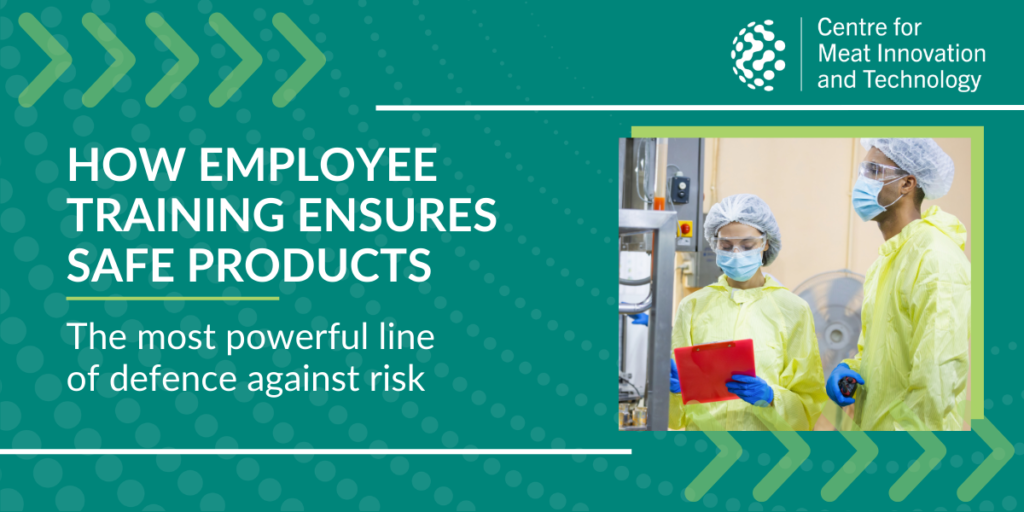
By Baljit Kheeva, Food Safety Systems Specialist, Meat & Poultry Ontario

In the food and beverage industry, food safety is a collective responsibility. The heart of this responsibility is the employees who operate along every link of the production chain. When trained effectively, employees become the industry’s first and most powerful line of defence against contamination, risk, and public health threats.
From the moment livestock enters a facility to the final packaging of products, employees are positioned to detect early signs of hazards. Whether it’s a temperature irregularity, sanitation lapse, or equipment malfunction, their actions or inaction can determine the safety of the food reaching consumers. It’s no exaggeration: the vigilance and expertise of employees form the backbone of every safe food.
And there is no doubt that the success of a HACCP (Hazard Analysis and Critical Control Points) plan depends on how well staff are trained, not just in procedures, but in understanding why they are important.
Effective Training
Effective training isn’t one-size-fits-all. It should be tailored to specific roles, regularly refreshed, and hands-on wherever possible. Role-playing scenarios, visual aids, and real-time feedback encourage retention and engagement. When HACCP principles become second nature, employees build a food safety culture that is resilient, adaptive, and deeply ingrained.
An effective training program should aim to:
• Develop competency in identifying and preventing food hazards
• Instill confidence so staff act decisively when issues arise
• Reinforce a safety culture where everyone shares responsibility
Why Training Is Essential, Not Optional
Training isn’t about memorizing policies—it’s about creating food safety ambassadors at every station.
Training is the tool that transforms workers from passive participants to proactive protectors of food safety. Without consistent, high-quality instruction:
• Critical Control Points (CCPs) may be missed or mismanaged.
• Hazards go undetected, elevating contamination risks.
What Employees Say Matters
Include workers in shaping the training. When staff are involved in building food safety practices, they’re far more likely to internalize them. Ask:
• “What makes this procedure hard to follow?”
• “What could make it easier to notice problems sooner?”
The best insights often come from the breakroom, not the boardroom. Employee training is the pulse of HACCP success. By investing in your people, making them competent, confident, and connected to the mission, you’re not just meeting regulations. You’re raising the standard for food safety.