Smart Slaughter
How Small and Medium Abattoirs Can Leverage Innovative Technologies
By Daphne Nuys-Hall, Technical Director, Meat & Poultry Ontario
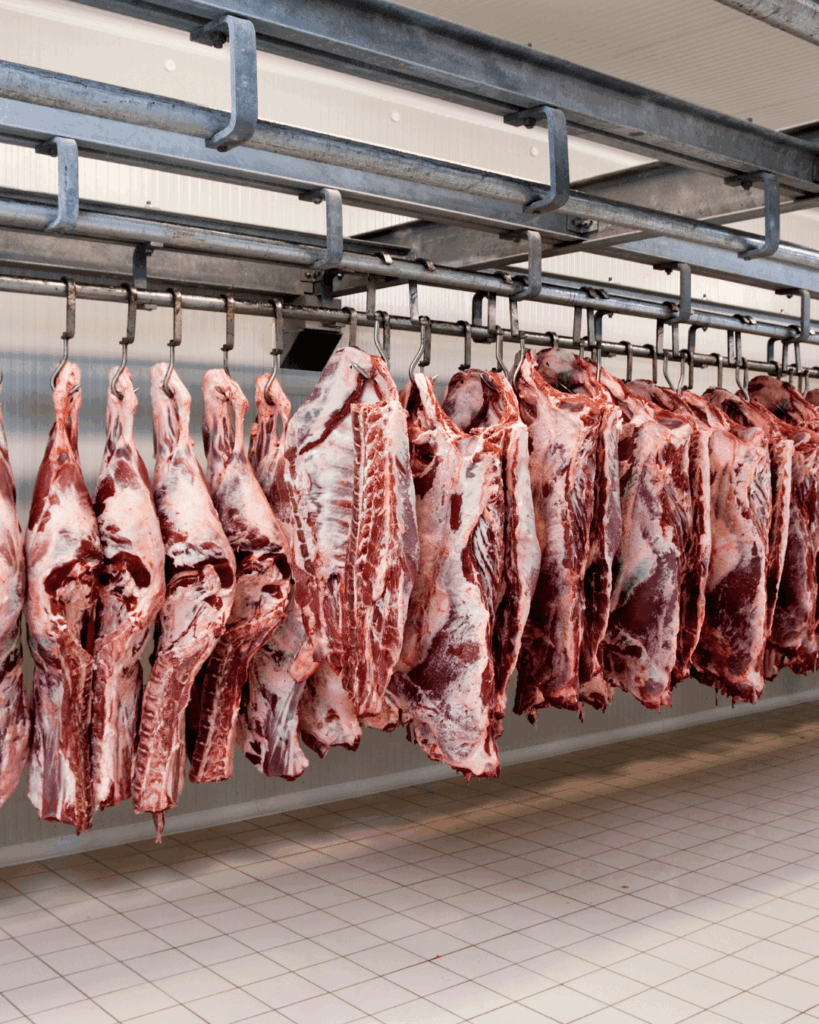
The global meat industry is evolving, and small to medium-sized abattoirs are uniquely positioned to benefit from the new wave of technology transforming the sector. While large-scale processors often dominate headlines with high-tech facilities and massive automation budgets, a growing number of affordable, scalable innovations are now within reach for smaller operations.
From improving efficiency and hygiene to boosting traceability and sustainability, these technologies offer real-world benefits—without requiring a multi-million-dollar investment. Here’s a look at how small and medium abattoirs around the world are embracing practical innovations to future-proof their businesses.
1. Affordable Automation and Robotics
Automation doesn’t have to mean replacing your entire production line with robots. For small abattoirs, targeted automation in specific tasks—like carcass splitting, cutting, or packaging—can lead to significant improvements in productivity and safety.
Compact, modular robotic systems are becoming more accessible and user-friendly. Companies like Jarvis and Industries Riopel offer semi-automated tools designed specifically for mid-size plants. These systems can reduce repetitive strain injuries among staff, minimize product waste, and increase daily throughput—even in limited floor space.
Some smaller processors are using programmable meat-cutting machines or mechanical deboners that require less training and deliver consistent results. These systems are often mobile or modular, making them easy to integrate into existing lines.
2. AI-Powered Carcass Grading and Monitoring
Artificial intelligence isn’t just for tech giants. Cloud-based AI tools are now being used by smaller processors to improve meat grading and quality control.
Affordable camera systems equipped with AI algorithms can grade carcasses based on fat coverage, marbling, and muscle structure. These tools are more consistent than the human eye and can help businesses get better prices by meeting customer and market specifications more accurately.
Some AI platforms also offer predictive maintenance alerts for machinery, helping small facilities avoid costly downtime by addressing equipment issues early.
3. Blockchain Lite for Traceability
Consumers and retailers are increasingly demanding transparency in the meat supply chain. While full-scale blockchain platforms might seem out of reach, many small abattoirs are adopting simplified versions—sometimes called “blockchain lite”—to provide digital records of animal origin, processing date, and handling conditions.
These systems often use QR codes and cloud-based apps to track animals from farm to plate. This not only helps build consumer trust but also makes compliance with export and food safety regulations easier and more affordable.
Many companies offer easy-to-use platforms tailored to small processors looking to digitize their records without breaking the bank.
4. Internet of Things (IoT) for Smarter Operations
Smart sensors can provide small abattoirs with real-time insights into their operations—no IT department needed. Temperature sensors in chillers, pH monitors in effluent systems, and wearable trackers for workers and livestock are examples of low-cost IoT tools that can alert managers to issues before they escalate.
For instance, temperature monitoring systems that send SMS alerts if chillers rise above safe levels can prevent spoilage. Water flow sensors can identify leaks or overuse, reducing utility costs.
These systems can often be installed quickly and paid for monthly, making them viable even for lean budgets.
5. Virtual Training for Staff
One challenge faced by many small and medium abattoirs is onboarding and upskilling staff efficiently. Virtual and augmented reality (VR/AR) tools can help.
Companies like VRAI and Interplay Learning offer immersive training simulations that teach hygiene practices, equipment handling, and safety procedures. These can be used on inexpensive headsets or even smartphones, reducing the need for one-on-one training and downtime.
By offering consistent, hands-on training, these tools help improve performance and reduce workplace accidents—a key benefit for small teams.
6. Sustainable Waste and Water Management
Sustainability is becoming a competitive advantage, even for smaller operations. Fortunately, there are affordable solutions that improve environmental performance while cutting costs.
For example, installing a basic anaerobic digester can convert organic waste into biogas for heating or electricity. Composting systems can turn by-products into soil enhancers for local farms.
On the water side, compact filtration and recycling units allow some abattoirs to reuse process water, significantly reducing bills and meeting environmental regulations more easily.
Some government programs and rural development grants may even offer financial support for businesses investing in green technologies.
7. Non-Thermal Sterilization for Food Safety
Maintaining high food safety standards is essential but can be expensive. Newer, non-thermal technologies like high-pressure processing (HPP) and cold plasma offer chemical-free ways to sterilize meat and surfaces.
While industrial HPP units are still pricey, small-scale toll processors (third-party HPP service providers) are popping up in major markets, allowing smaller processors to access the technology without buying the equipment.
Cold plasma units for equipment and air disinfection are becoming more compact and cost-effective, helping small abattoirs meet hygiene standards and reduce pathogen risks without harsh chemicals.
The Bottom Line: Innovation at Your Scale
Technology is no longer reserved for mega-processors. Small and medium abattoirs now have access to a growing toolbox of smart, scalable solutions that can help them remain competitive, safe, and compliant.
By starting small—automating a single task, digitizing traceability, or installing a sensor network—SMEs can unlock operational efficiencies and build a strong foundation for growth. Many of these technologies also align with evolving consumer expectations around transparency, sustainability, and quality.
As customer demands shift and regulations tighten, forward-thinking businesses that adopt smart innovations today will be best positioned for success tomorrow.